%20(2).png)
Double-Sided Stone Walls, Patio Sitting Walls & Custom Stone Columns
Building freestanding, double-sided stone walls, integrated patio sitting walls, and vertical stone columns requires a strict focus on gravity, vertical load distribution, and material balancing. Unlike retaining walls built to counteract lateral soil pressure, freestanding stone features must sustain their structural equilibrium independently. Our masonry framework approaches these installations through calculated load paths, solid internal stone-on-stone interlocking, and continuous vertical alignment. Whether constructing a 1App-high patio sitting wall for functional overflow seating, building a 24x24-inch structural driveway entry column, or executing a thin stone veneer wrap around structural porch and pavilion posts, our installations feature tight joint layouts, flat plumb lines, and zero structural dead space.


Local Information
Properties across Litchfield County—including Kent, Washington, Roxbury, and Bethlehem—are characterized by high-silt glacial till soils, shallow bedrock formations, and severe seasonal frost-heave cycles. These environmental variables exert substantial vertical pressure on shallow foundations, causing un-anchored stonework to heave, tilt, and fracture. Our local masonry layouts prioritize deeply anchored subsurface structures. We excavate down to undisturbed subgrade materials and place solid concrete footing pads reinforced with Grade 60 steel rebar below the minimum 42-inch Connecticut frost line. This ensures that freestanding fieldstone boundary markers, rustic granite pillars, and patio columns maintain absolute structural stability through extreme New New England seasonal thaws.
The expansive property layouts and private entries of Upper Fairfield County—anchored by Ridgefield, Newtown, and Easton—frequently demand large-scale stone columns to anchor driveway lines or frame multi-tier patio step systems. Driveway entry pillars in this region are often specified at heights of 5 to 6 feet to accommodate heavy automated iron or timber gate assemblies. To handle the continuous physical leverage and motor vibrations of these gate systems, we construct these columns around an interior structural concrete masonry unit (CMU) core. This core is anchored directly to a monolithic subsurface concrete grade beam, completely preventing the columns from pulling inward or tilting over time.
In the residential layouts of Hartford County, particularly throughout Avon, Simsbury, and Farmington, masonry projects frequently integrate with extensive bluestone patios and formal outdoor living configurations. Soil profiles here regularly feature dense New Haven clays and fine silty sands with poor natural surface drainage. Our freestanding walls in these locations are designed to function as crisp geometric accents, utilizing highly uniform stone patterns such as semi-squared ashlar or square-and-rectangular layouts. Sitting walls flanking new patio surfaces are planned at exact functional seating heights (18 to 22 inches above finish stone grade) and built with integrated low-voltage lighting conduits to combine premium visual lines with practical property utility.
Along the marine exposures of the Connecticut coastline—stretching from Greenwich and Westport to Old Saybrook and Stonington—stonework faces continuous exposure to salt-spray, high-velocity winds, and high atmospheric moisture. Coastal salt air causes rapid chemical breakdown in standard, low-strength retail mortar mixes, resulting in joint crumbling, efflorescence, and face spalling. Our shoreline masonry layouts counteract this environmental stress by utilizing dense, low-absorption stones, such as regional granites and select quartz fieldstones, paired with specialized, highly flexible performance mortars. This structural pairing resists chloride intrusion and prevents moisture absorption from fracturing the masonry face under coastal weather changes.
A critical structural distinction in modern masonry design is the planning choice between full-bed building stone and thin stone veneer applications. When wrapping structural support elements, such as pressure-treated 6x6 lumber or steel structural columns for a porch, pavilion, or covered deck, full-bed stone is physically impractical due to footprint limits and excessive weight loads on the subgrade. For these projects, we design a technical thin stone veneer wrap (using stone sliced to a precise thickness of 1 to 1.5 inches). The layout requires fastening an ASTM-compliant water-resistive barrier (WRB) and self-furring 2.5lb or 3.4lb galvanized metal lath over the structural post, applying an scratch coat of performance mortar, and setting the veneer flats using specialized 90-degree corner pieces to hide the seams completely, establishing the clean presentation of a solid stone pillar.
General Design Information
A critical structural distinction in modern masonry design is the planning choice between full-bed building stone and thin stone veneer applications. When wrapping structural support elements, such as pressure-treated 6x6 lumber or steel structural columns for a porch, pavilion, or covered deck, full-bed stone is physically impractical due to footprint limits and excessive weight loads on the subgrade. For these projects, we design a technical thin stone veneer wrap (using stone sliced to a precise thickness of 1 to 1.5 inches). The layout requires fastening an ASTM-compliant water-resistive barrier (WRB) and self-furring 2.5lb or 3.4lb galvanized metal lath over the structural post, applying an scratch coat of performance mortar, and setting the veneer flats using specialized 90-degree corner pieces to hide the seams completely, establishing the clean presentation of a solid stone pillar.
Popular Material Selections & Finishes
The structural survival and visual longevity of any freestanding wall or pillar layout depends entirely on specifying the correct stone profile and capping material for the project's physical environment.


Learn About How We Approach the Double-Sided Stone Walls, Patio Sitting Walls & Custom Stone Columns Design Process
Our stone wall and entry column execution is handled across four highly disciplined phases:
Layout & Footing Excavation: We mark out exact wall runs or column dimensions, digging foundations down to undisturbed subgrades below the 42-inch frost line and pouring steel-reinforced concrete base pads or piers depending on the requirements for your project.
Framing & Core Preparation: We erect structural masonry block cores for freestanding gate columns, or prepare existing 6x6 structural wood posts with high-grade vapor barriers and galvanized wire mesh lath.
Stone Sorting & Level Courting: Our team manually sorts through the stone pallets to isolate matching corner flats and face stones, laying level courses with continuous string lines to maintain absolute horizontal alignment and tight joint profiles.
Cap Setting & Joint Tooling: Heavy bluestone or granite caps are set with calculated drainage overhangs. The mortar joints are then tooled to a uniform, clean indentation, and the surrounding site is completely cleared of material residues and restored to a pristine finish.
The Structure and Site
Freestanding columns and double-sided sitting walls rely on strict interior physics and structural binding techniques to preserve their alignment across multiple decades.
A true freestanding or patio sitting wall cannot be built as two separate, independent parallel stone faces. Every 3 to 4 linear feet, we integrate full-depth structural "through-stones" (bond stones) that bridge across the entire width of the wall, physically anchoring the front and back faces together. The internal cavity between the two stone faces—known as the hearting—is packed completely solid with high-strength performance mortar and dense stone fragments, completely eliminating empty voids or pockets that could trap water. For driveway columns, the stone courses are built up around structural concrete block cores that are reinforced internally with vertical Grade 60 steel rebar rods and poured solid with high-slump concrete grout, creating an unbreakable monolithic anchor.
Executing straight stone walls and vertical pillars requires meticulous site geometry and laser-level precision. For double-sided sitting walls and freestanding boundaries, we establish parallel dual string-lines to guide the masonry run, maintaining a calculated vertical taper (batter) from a wider wall base to a narrower top cap to maximize gravity stability. Foundations are cleared of all organic matter and loose topsoil before pouring thick concrete base pads. Raw stone pallets are staged strategically along driveway margins or patio perimeters using turf-protection matting, minimizing soil compaction and safeguarding the property's drainage layouts during the material delivery and sorting phases.
Regulatory Considerations for Double-Sided Stone Walls, Patio Sitting Walls & Custom Stone Columns
Navigating local building guidelines for residential stone features involves strictly managing municipal height limits and public right-of-way visibility setbacks, particularly for driveway entry columns turning onto local Connecticut roadways. Most Connecticut towns impose rigorous maximum height rules (typically capping front-yard columns at 4 feet and rear property features at 6 feet) to maintain unobstructed sightlines for vehicular traffic. We handle the entire local zoning review and permit tracking process, ensuring your patio sitting walls and entrance pillars are placed cleanly within legal property setbacks and built to proper height-to-width safety ratios to secure rapid municipal approvals.
Some of Our Project Portfolio


Get in Touch!
Additional Features & Related Services
Our custom stone wall and column capabilities include: 24"x24" Driveway Entry Columns; 18"-30" High Patio Sitting Walls; Thin Stone Veneer Post Wraps; Structural Concrete Block Column Cores; Full-Bed Freestanding Garden Walls; 2-Inch Overhanging Thermal Bluestone Coping; Rock-Faced Granite Column Caps; Structural Wood Post Masonry Enclosures; Courtyard Stone Accent Walls; Custom Mortar Joint Profiling; Integrated Low-Voltage Column Conduit Layouts; Under-Cap Kerf Drip Edge Execution.
Common Installation Failures to Avoid
Hollow Core Columns: Building the outer stone face of a 24x24-inch driveway pillar and filling the center core with loose sand, unwashed gravel, or construction scrap instead of packing it solid with high-strength structural grout. Rainwater eventually penetrates through hairline cap joints, fills the internal void, and violently shatters the entire column open during a winter freeze-thaw cycle.
Deficient Veneer Wood Wraps: Adhering thin stone veneer directly onto exterior plywood or bare 6x6 pressure-treated wood posts without installing a weather-resistive barrier, galvanized wire mesh lath, or structural scratch coat. The underlying wood expands and contracts with atmospheric humidity changes, breaking the direct mortar bond and causing the stone pieces to rapidly delaminate and shear off the post.
Lack of Bond Stones in Sitting Walls: Constructing a double-sided patio sitting wall as two independent parallel faces of stone with no internal through-stones. Lacking a mechanical physical connection between the two sides, the center core of the wall eventually swells from moisture accumulation, causing the outer stone faces to bulge outward and split down the middle under their own weight.
Flush-Cut Column and Wall Coping: Installing top cap stones or bluestone coping that are cut flush with the finished face of the stone wall or column. Lacking a protective overhang or a continuous kerf drip edge, rainwater sheets straight down the vertical face of the masonry, continuously saturating the mortar joints and leading to rapid joint erosion, moss growth, and structural crumbling within a few winter seasons.
Double-Sided Stone Walls, Patio Sitting Walls & Custom Stone Columns FAQ's
Can you wrap my existing wood porch, pavilion, or covered deck posts in stone?
Yes. We utilize premium thin stone veneer (typically 1 to 1.5 inches thick) to cleanly wrap structural pressure-treated 6x6 wood or steel posts. The process requires wrapping the wood post in a high-density weather-resistant vapor barrier to protect the timber from moisture, mechanically fastening a heavy-gauge galvanized wire mesh lath, and applying a structural mortar scratch coat. We then lay the stone using specialized 90-degree corner stones to wrap around the post edges, completely hiding the seams and delivering the presentation of a solid, load-bearing stone pillar without the massive footprint or excessive weight.
How high and wide should driveway entry columns be built for a residential property?
For standard residential properties, the most balanced and visually clean layout utilizes columns sized at 24x24 inches or 30x30 inches, standing between 4 and 5 feet tall. This scale provides a substantial, professional presentation for your entrance layout and easily accommodates structural block cores, internal electrical conduits, and heavy gate hardware without looking overly commercial, blocking sightlines leaving the driveway, or visually dominating the front layout of your property.
Why is the center of my old double-sided stone wall bulging and splitting apart?
Center bulging and splitting occurs when a double-sided wall has been built as two separate, unlinked parallel faces with a hollow center or a center packed with loose dirt and sand. Without full-width "through-stones" to mechanically tie the front and back faces together, there is nothing holding the two sides in alignment. Rainwater enters the wall top, settles in the loose internal core, and expands into ice during winter. This intense internal hydrostatic pressure forces the two stone faces to separate, bulge outward, and eventually collapse.
What is the purpose of an overhanging cap with a drip edge on a sitting wall or pillar?
An overhanging cap extending 1.5 to 2 inches beyond the finished stone face serves as the primary roof for the underlying masonry structure. By cutting a continuous 1/4-inch groove (a kerf drip edge) into the underside of the overhanging cap, rainwater running off the top is forced to hit the groove and drop straight to the ground, rather than running down the vertical face of the wall. This keeps the mortar joints dry, completely preventing winter freeze-thaw cracking, joint crumbling, and rapid moss accumulation.
Other Spaces We Build and Services We Provide
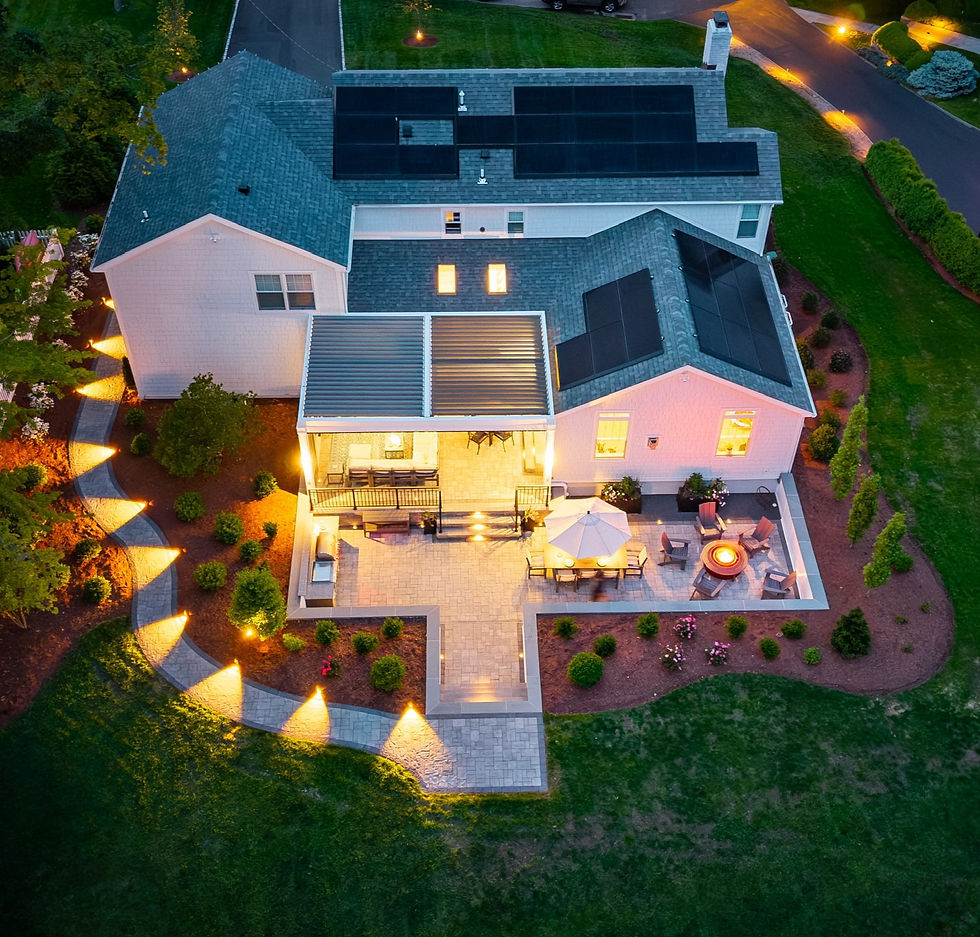
Exterior and Landscape Lighting

Fireplaces and Fire Features

Water Features and Waterfalls

Stone Veneer and Composite Stone Veneer

Patios and Walkways

Outdoor Kitchens

Concrete

Deck Construction

Trails and Garden Paths

Driveways

Retaining Walls

3-Season and Enclosed Outdoor Living Spaces

Site Drainage & Water Management
Softscape Design & Planting Installation
Outdoor Living Design and Build

Fencing and Privacy Plantings
Commercial Retaining Walls-- ADD INTO RETAINING WALL SECTION


