%20(2).png)
Custom Hardwood & Premium Composite Decks
A high-end deck is an extension of your home’s living space that must safely manage dead loads (the weight of the structure and heavy additional features like a hot tub or fire feature), live loads (occupants), and environmental uplift forces. Deck construction is a strict exercise in structural planning and residential code compliance to ensure a long lasting and beautiful space.
Our design-build process eliminates the common points of framing failure by preventative structural planning-- utilizing heavy-duty structural fastening systems, joist-guard flashing tapes to prevent rot, and advanced sub-structure options when possible like structural steel framing alongside premium composites, cedar and exotic hardwoods to create stunning custom decks in CT.


Local Information
Framing luxury decks across Litchfield County requires addressing the physical realities of the Northwest Hills' highest elevations and erratic glacial geology. In highland zones like Goshen and Litchfield—which experience the most severe winter weather and snow accumulation in the state—deck frames must be calculated to handle heavy snow-drift loading, requiring tighter joist spacing and oversized beam spans to prevent deflection. Geologically, the steep slopes and shallow bedrock throughout Washington, Roxbury, and Woodbury make standard 42-inch sonotube excavation impractical; hitting solid ledge rock at shallow depths requires drilling and epoxy-pinning structural steel dowels directly into the stone substrate to anchor the foundation. This ensures that whether the deck supports a heavy timber-frame pavilion in Watertown and Bethlehem or bridges a steep grade drop, the entire structural frame remains entirely isolated from lateral wind shear and winter ground heave.
In rural Fairfield county, in areas like Newtown, Wilton, and Redding, the combination of large 2+ acre lots and severe grades means decks are frequently Elevated Structural Systems rising 10 to 20 feet off the ground. We work with trusted structural engineers to bolster these high-clearance decks using LVL (Laminated Veneer Lumber) multi-ply beams and structural steel posts to eliminate mid-span footings and leave the lower patio space completely open. In New Canaan, we navigate some of the tightest Impervious Surface Ratios (ISR) in CT; because standard deck boards allow water to drain through to the soil, they are calculated differently than solid patios, making them a legal loophole to maximize outdoor living square footage. For lakefront homes in New Fairfield, Sherman, and Brookfield, the critical technical requirement is Wind-Uplift Mitigation. The wind tunnels created across Candlewood Lake generate massive upward shear force; we engineer these decks with heavy-duty tension ties and through-bolts to lock the deck securely to the home’s primary framing. Architectural continuity is always in mind, seamlessly matching deck trim, fascias, and railing systems to the properties high-end siding profile.
The primary hurdle for deck construction across the Farmington Valley is the "Red Clay" Substrate. In Farmington, Avon, and Simsbury, clay-heavy soils expand with massive hydraulic force when frozen. If traditional concrete deck piers are not at a proper deptgh, perfectly smooth or lack an un-bonded sleeve, the freezing clay will grip the concrete and lift the pier (frost-jacking), warping the frame. For our projects in West Hartford and Glastonbury, where homes are closely situated, we integrate architectural Acoustical and Visual Privacy Screens into the deck framing to create isolated spaces. For builds in Burlington and Canton, where valley humidity accelerates wood rot, we rely even more on our waterproofing measures: wrapping the top of all pressure-treated joists with butyl flashing tape to seal around fastener penetrations and extend the sub-frame’s lifespan to 30+ years in even the wettest areas.
Shoreline deck construction from Greenwich to Westport and Darien is strictly governed by FEMA Flood Zone Regulations (V-Zones and A-Zones). For coastal estates in Southport and Madison, any deck built below the Base Flood Elevation must utilize breakaway framing methodologies or be engineered on open pilings that allow tidal surges to pass through without destroying the house foundation. Atmospheric salinity along the coast causes rapid corrosion of standard galvanized hardware; therefore, we use 316 Marine-Grade Stainless Steel fasteners, hidden clips, and joist hangers exclusively. In Guilford and Branford, where code dictates 120+ MPH Wind Load ratings, we install continuous load-path connectors (hurricane ties) from the footings all the way through to the rafter connections on covered decks to survive maritime storm events.
We use lidar site scanning and 3D modeling to solve spatial layout and structural consideration long before code enforcement sees the blueprints. This thourough approach at this early stage ensures that our design is feasible, and that the expectations we give you are accurate, before you are invested in a gorgeous completed rendering.
Common Looks: Modern Minimalist (clean lines, hidden fasteners, integrated perimeter lighting), Transitional New England (natural wood tones framed by dark accent borders), and Panoramic Luxury (frameless glass or marine-grade horizontal cable railings to maintain unobstructed views).
Picture-Frame Bordering: We standardize a multi-board "picture-frame" perimeter layout using darker, contrasting boards. This serves a dual purpose, it completely hides the raw, unsightly end-cuts of composite boards and provides a high-contrast visual cue at the deck's edge for safety.
Spatial Ergonomics & Traffic Flow: Our design phase charts "heat maps" of human movement. We simulate furniture footprints—ensuring a 6-chair dining configuration has a minimum 36-inch clearance envelope behind it—and zone separate functional areas (cooking, dining, lounging) with distinct floor-pattern changes or step-downs.
General Design Information
We use lidar site scanning and 3D modeling to solve spatial layout and structural consideration long before code enforcement sees the blueprints. This thourough approach at this early stage ensures that our design is feasible, and that the expectations we give you are accurate, before you are invested in a gorgeous completed rendering.
Common Looks: Modern Minimalist (clean lines, hidden fasteners, integrated perimeter lighting), Transitional New England (natural wood tones framed by dark accent borders), and Panoramic Luxury (frameless glass or marine-grade horizontal cable railings to maintain unobstructed views).
Picture-Frame Bordering: We standardize a multi-board "picture-frame" perimeter layout using darker, contrasting boards. This serves a dual purpose, it completely hides the raw, unsightly end-cuts of composite boards and provides a high-contrast visual cue at the deck's edge for safety.
Spatial Ergonomics & Traffic Flow: Our design phase charts "heat maps" of human movement. We simulate furniture footprints—ensuring a 6-chair dining configuration has a minimum 36-inch clearance envelope behind it—and zone separate functional areas (cooking, dining, lounging) with distinct floor-pattern changes or step-downs.
Popular Material Selections & Finishes
The wear surface—the actual decking boards—is the most heavily abused element of the structure. Selecting a material requires balancing aesthetics and maintenance tolerances against physical limitations like UV heat retention and slip resistance.


Landscape Lighting
Popular Materials: Solid Cast Brass, Heavy-Gauge Raw Copper, Aircraft-Grade Anodized Aluminum, Low-Voltage Integrated LED Modules (2700K–3000K), Multi-Tap Transformers (12V–15V).
Common Applications & Technical Info: Engineered for structural facade highlighting, safe pathway illumination, security boundary mapping, and hardscape accentuation (including under-cap wall lights and flush step inserts). Systems operate on low-voltage (12V–15V) alternating current routed through direct-burial landscape wiring (typically 12/2 or 10/2 AWG). Precision voltage drop calculations are mandatory for long runs to prevent dimming or uneven lumen output at the end of a zone line. To withstand high soil acidity, heavy New England rainfall, and seasonal freeze-thaw cycles, all subterranean wire joints must utilize moisture-proof, silicone-filled mechanical splices or heat-shrink tubing to stop ground faults and capillary water wicking into the copper leads.
Aesthetics & Maintenance: Focuses on seamless visual design utilizing specific color temperatures: 2700K warm-white is preferred to enhance the rich earth tones of natural New England masonry and foliage, while 3000K provides a crisper look for contemporary architectures or silver-toned stone flatwork. Heavy cast brass and copper alloys are specified because they naturally oxidize into a deep structural bronze or verdigris patina, completely eliminating the chipping, bubbling, and corrosion issues common to painted metals. Maintenance requires seasonal pruning of surrounding plant growth, clearing mulch off lens housings to maintain proper thermal dispersion, and checking fixture alignments after winter frost heaving.
Pricing Guidance: Professional-grade solid cast brass and copper low-voltage LED systems represent a premium architectural investment. They deliver an indefinite operational lifespan and a fractional energy footprint, easily outperforming cheap aluminum or retail-grade composite alternatives.
Deck Framing
Popular Materials: MCA (Micronized Copper Azole) Pressure-Treated Southern Yellow Pine, KDAT (Kiln-Dried After Treatment) Lumber, Light-Gauge Structural Steel Framing (e.g., Trex Elevate).
Common Applications & Technical Info: The load-bearing structural skeleton for elevated and ground-level outdoor living platforms. Framing configurations must strictly adhere to IRC structural span tables and regional Connecticut snow load requirements. To prevent structural joist rot, all top edges of wood beams and joists must be protected with a high-bond butyl flashing tape prior to decking installation. All ledger board connections require code-approved structural fasteners (such as LedgerLok screws) and lateral tension ties anchored directly to the house framing. Footings must be excavated and poured to a minimum depth of 36 to 42 inches to clear the local frost line and prevent winter heaving.
Aesthetics & Maintenance: This component is entirely subterranean or concealed beneath the surface decking boards. Structural steel framing provides perfectly flat planes that will not warp, twist, crown, or rot over a lifetime, requiring zero structural maintenance. Wood framing moves dynamically with seasonal humidity and requires periodic inspections of structural hangers and mechanical fasteners for corrosion.
Pricing Guidance: Standard pressure-treated lumber represents the foundational baseline; KDAT lumber occupies the mid-tier; structural steel framing is a top-tier premium investment that maximizes the lifespan of the overlay decking material.
Hardwood Decking
Popular Materials: Ipe, Cumaru, Garapa, Tigerwood.
Common Applications & Technical Info: Premium architectural surface boards for high-end residential decks, boardwalks, and steps. These exotic South American hardwoods possess extreme density and high Janka hardness ratings, rendering them naturally resistant to wood-boring insects, rot, scratching, and fire (carrying a Class A fire rating). Technical installation requires pre-drilling every fastener hole and utilizing 305 or 316-grade stainless steel trim screws or specialized heavy-duty hidden clip systems. All end cuts must be immediately sealed with a wax-based emulsion (such as Anchorseal) to prevent end-checking and splitting.
Aesthetics & Maintenance: Exhibits a rich, multi-tonal wood grain appearance ranging from deep amber to dark reddish-brown. To maintain the original saturated coloration, the surface must be cleaned and coated annually with a UV-blocking penetrating oil formulation designed specifically for exotic hardwoods. Left untreated, it will slowly patina to an architectural silver-gray without experiencing any reduction in structural integrity.
Pricing Guidance: Exotic hardwood decking is an elite, top-tier luxury material investment with an expected lifespan exceeding 40 years.
Composite Decking
Popular Materials: Capped Wood-Plastic Composite, Capped Polymer / Advanced PVC (e.g., TimberTech AZEK).
Common Applications & Technical Info: Engineered surface boards for low-maintenance residential decks, pool surrounds, and waterfront docks. Advanced capped polymer (PVC) contains zero wood fibers, yielding a 0% water absorption rate that renders it completely immune to the mold, swelling, warping, and splitting common in damp, wooded, or coastal Connecticut microclimates. Boards must be installed using engineered hidden fastener clips with precise gapping metrics to accommodate seasonal thermal expansion and contraction.
Aesthetics & Maintenance: Features highly realistic, multi-tonal wood grains and wire-brushed textures that mimic natural timber. It completely eliminates the need for seasonal sanding, staining, painting, or sealing. Maintenance is strictly limited to low-pressure soft washing with soap and water to clear pollen, dirt, and surface organic films.
Pricing Guidance: Premium capped PVC occupies the high-end luxury tier, while mid-grade capped wood composites offer a dependable, cost-effective alternative.
Audio/Video
Popular Materials: Powder-Coated Marine-Grade Aluminum Enclosures, UV-Protected Polycarbonate Enclosures, 70V Landscape Audio Systems (e.g., Coastal Source), Low-Voltage Direct-Burial Cabling.
Common Applications & Technical Info: Weatherproof entertainment systems integrated into outdoor kitchens, structural pavilions, pool zones, and patios. Outdoor video displays must feature high-nit, ultra-bright anti-glare screens (minimum 1000+ nits) to remain visible under direct sunlight, along with internal climate regulation systems to withstand temperature swings from sub-zero winters to hot summer days. Outdoor audio uses low-voltage, direct-burial cable runs linked to a 70-volt amplifier loop, ensuring uniform sound pressure levels across large zones without signal degradation.
Aesthetics & Maintenance: Audio subwoofers are direct-buried underground, while satellite speakers are camouflaged within landscape beds or flush-mounted directly into structural pillars. Maintenance requires wiping down video lenses with approved display cleaners and blowing out landscape speaker grills during fall cleanups to prevent organic accumulation.
Pricing Guidance: Commercial-grade 70V landscape audio infrastructure and true weather-sealed architectural displays represent a premium specialty tier investment.
Marine Grade Hardware
Popular Materials: 316 Stainless Steel, Hot-Dipped Galvanized Steel (ASTM A153), Silicon Bronze.
Common Applications & Technical Info: Structural fasteners, lag screws, thru-bolts, tie-back rods, dock cleats, and tension cables deployed on waterfront structural components (such as pilings, bulkheads, decks, and seawalls) exposed to salt spray or constant water submersion. Standard 304-grade stainless steel or standard zinc-plated hardware is excluded due to rapid chloride-induced pitting; 316 stainless steel contains molybdenum, providing distinct immunity to localized crevice corrosion and pitting in high-salinity or harsh freshwater environments.
Aesthetics & Maintenance: Displays a clean, industrial, high-polish or rugged matte galvanized appearance. Maintenance requires annual torque inspections for structural tightness, checking for galvanic corrosion where dissimilar metals interface, and periodic freshwater pressure rinsing.
Pricing Guidance: Sits at a clear material premium over standard residential hardware, but is a non-negotiable safety and structural longevity specification for waterfront construction in CT.
Decking
Popular Materials: Premium Capped Polymer (Advanced PVC), South American Hardwoods (Ipe, Cumaru), Capped Wood-Plastic Composites, Interlocking Structural Aluminum.
Common Applications & Technical Info: Surface flooring panels for elevated decks, ground-level backyard platforms, walkways, and pool surrounds. Material selection must match the specific microclimate of the site: heavily shaded, damp woodland areas require moisture-impervious capped polymer to eliminate wood-rot and surface mold risks, while wide-open, high-sun exposures require materials with high UV-stability and optimized thermal performance. Boards must be engineered to satisfy the load-bearing requirements of the underlying joist spans (typically 12 inches to 16 inches on-center) and installed with hidden fastener clips that dictate precise expansion and contraction gaps.
Aesthetics & Maintenance: Spans from the organic warmth and unique grain patterns of natural exotic timbers to sleek, uniform contemporary composite palettes. Maintenance scales from simple seasonal soap-and-water scrubbing (PVC and aluminum) to intensive annual power scrubbing, brightener applications, and UV-blocking oil seals (natural hardwoods).
Pricing Guidance: Covers a wide spectrum; pressure-treated lumber serves as the structural utility baseline, engineered wood-plastic composites sit in the mid-to-high tier, while premium capped PVC and exotic hardwoods represent the luxury top-tier standard.
Learn About How We Approach the Custom Hardwood & Premium Composite Decks Design Process
Luxury deck construction requires a deep understanding of structural load paths, material expansion, and stringent local building codes. Our modular design process treats your deck as a seamless extension of your home's architecture, analyzing structural footings, zoning setbacks, and framing spans long before a shovel touches dirt.
We do not run on loose estimates; a fixed-price agreement is issued only after architectural plans and structural details are completely locked. We value-engineer the entire framing assembly—comparing standard pressure-treated joists against engineered steel framing options—and evaluate foundation methods like traditional concrete piers versus helical piles.
We then guide you through a premium selections process, comparing the unmatched lifespan and rich grain of exotic hardwoods like Ipe or mahogany against the low-maintenance, high-durability performance of top-tier composite decking systems.
The Structure and Site
The visible boards of a deck are entirely reliant on the hidden structural skeleton beneath them. Wood rots from the inside out when moisture gets trapped between the metal fasteners and the joists, and frames warp when lateral shear forces aren't neutralized. Our structural blueprints are engineered to exceed standard building codes, focusing on continuous load paths and complete moisture isolation.
The Frame Construction: We utilize a minimum of 2x8 or 2x10 joists preferably spaced at 12 inches on-center (exceeding the standard 16-inch code baseline) for all composite and exotic hardwood builds. This tighter spacing reduces the micro-flexing of the boards, creating a rock-solid walking surface and preventing composite "sag."
Moisture Isolation (Butyl Taping): Every joist, rim, and beam is capped with a high-performance butyl flashing tape before the decking is laid. This creates a waterproof seal around every single hidden fastener penetration, stopping water from pooling in the wood grain and eliminating joist rot.
Mechanical Connectors: We design using a Continuous Load Path. This means we use heavy-duty engineered connectors (such as Simpson Strong-Tie hardware) to mechanically link the roof rafters to the top plates, the beam to the posts, and the posts to the footings. We replace standard toenailing with through-bolts and structural ledger screws.
Evolution Evolution (Structural Steel Framing): For premium, lifetime builds, we offer light-gauge structural steel framing. Steel cannot warp, twist, split, or rot, and it allows for massive spans with fewer vertical posts, providing a perfectly flat deck surface that lasts forever.
A premium deck is only as stable as the connection to the host structure and the soil beneath it. Our pre-construction audit analyzes four critical metrics:
The Threshold & Elevation Differential: We calculate the exact drop from the house's interior finished floor to the top of the deck joists. This ensures a flush or code-compliant entry step that completely accounts for flashing clearances and door thresholds to prevent driving rain from migrating indoors.
Ledger Attachment Feasibility: We perform a physical inspection of the house’s rim joist. If the home utilizes engineered wood I-joists or floor trusses, standard lag screws cannot be used uniformly. We map out the specialized through-bolt fastening locations or dictate a completely freestanding deck architecture if the home's framing is cantilevered or structurally compromised.
Obstruction & Utility Clearance: We locate all existing utility bottlenecks, including AC condensers, septic cleanouts, well heads, and subterranean propane or electrical lines. If the deck must cantilever over or surround these systems, we design structural access hatches to maintain code-mandated utility utility accessibility.
Subgrade Topography: We measure grade drops across the footprint using laser levels. Extreme slopes dictate the use of intermediate diagonal bracing, lateral knee-braces, and larger structural posts (6x6 minimum) to eliminate deck sway or lateral shifting.
Regulatory Considerations for Custom Hardwood & Premium Composite Decks
We handle the entire structural submittal, zoning review, and building inspection process across Connecticut, ensuring strict compliance with the CT State Building Code (IRC Section R507).
The Ledger & Lateral Load Rule (IRC R507.9): Legally, a deck cannot ledger to brick veneer, house cantilevers, or over existing siding. We install staggered 1/2-inch structural timber screws directly into the home's primary rim joist and integrate internal lateral tension ties to prevent the structure from pulling away from the residence.
The 30-Inch Railing Threshold: Any deck surface higher than 30 inches above adjacent grade requires a mandatory 36-inch guardrail engineered to pass the "4-inch sphere test." For elevated builds over the steep terrains of Newtown, Washington, or Woodbury, this requires rigorous structural post-to-frame blocking to resist lateral force.
Wetlands & Watershed Reviews (IWWC): Building a deck near water resources—such as properties on Candlewood Lake in New Fairfield, Sherman, and Brookfield, or the river basins of Canton and Burlington—triggers a mandatory Inland Wetlands review if the footprint falls within a 100-foot upland review zone.
ISR & Zoning Overlays: High-density or strictly zoned towns like New Canaan, Ridgefield, and West Hartford enforce rigid Impervious Surface Ratios. We navigate these lot coverage limits by utilizing legally compliant slatted deck framing over open stone aggregate beds to optimize stormwater infiltration.
FEMA Coastal Mandates (ASCE 24): For shoreline decks in Greenwich, Westport, and Darien, structures seaward of the coastal construction line must comply with strict flood velocity rules. This requires independent or breakaway framing foundations and 316 marine-grade stainless steel hardware to clear municipal coastal site inspections.
Some of Our Project Portfolio


Get in Touch!
Additional Features & Related Services
Multi-Level & Covered Deck Systems: Expand your usable square footage with multi-tiered designs, integrated under-deck drainage systems, or custom pergolas and pavilions that provide shade and all-weather protection.
Premium Composite & Exotic Hardwoods: Enjoy a low-maintenance, ultra-durable outdoor space with top-tier materials like Trex, TimberTech, or rich Ipe hardwood, expertly framed to prevent warping and ensure structural longevity.
Integrated Masonry & Hardscape Fusion: Seamlessly blend your new wood or composite deck with custom stone patios, outdoor kitchens, or built-in fire pits for a cohesive, high-end backyard transition.
Custom Seating, Railings, & Accent Lighting: Elevate safety and style with low-voltage LED step and post lighting, modern cable or glass railing systems, and custom-built perimeter bench seating.
Turnkey Engineering & Permitting: Skip the bureaucratic headaches. We handle the entire process from structural engineering and local Connecticut zoning permits to the final inspection, ensuring 100% compliance.
Common Installation Failures to Avoid
The "Caulk-Only" Ledger: Failing to install proper Z-flashing and ice/water shield behind the house ledger. Water runs down the siding, gets trapped, and rots the house’s rim joist, eventually leading to a catastrophic structural collapse. Improper
Post-to-Beam Tying: Simply resting a heavy beam on the side of a 6x6 post and fastening it with screws. Beams must rest completely on top of the post inside an approved structural notch or column cap so the weight is transferred straight down to the earth via solid column compression.
"Frost-Jacking" in Clay Soils: Using shallow or un-sleeved concrete footings in high-clay areas like the Farmington Valley. The freezing clay grips the rough concrete pier and rips it upward, twisting the entire deck frame. Affects can happen slowly over multiple winters.
Incorrect Hanger Fasteners: Using standard roofing nails or drywall screws to secure joist hangers. Hangers require specialized, high-shear structural connector nails or screws; standard fasteners will snap under the dead load of heavy composite boards.
Custom Hardwood & Premium Composite Decks FAQ's
Which deck material performs better in New England: exotic hardwoods like Ipe or premium composite?
Both materials offer elite durability, but they feature completely distinct performance characteristics that we analyze during our design selections phase. Exotic hardwoods like Ipe or mahogany possess an incredibly high density, giving them a natural resistance to rot, wood-boring insects, and heavy New England snow loads; however, they require annual oiling to maintain their rich color. Premium capped-polymer composites (like top-tier Azek or Trex lines) are virtually maintenance-free and completely immune to moisture retention, splintering, and warping, though they retain more ambient solar heat under direct sunlight than natural wood, but new technology has somewhat alleviated that issue.
How deep do deck footings need to be dug in Connecticut to comply with structural building codes?
To comply with the Connecticut State Building Code, all structural deck piers must be excavated to a minimum depth of 42 inches below finished grade, with some sites with bad soils or bedrock requiring helical piles or a more advanced footing system. This ensures the base of the footing rests safely below the state's established frost line. If a deck footing is poured shallower than 42 inches, seasonal frost heaving will lock onto the bottom of the concrete pier and push it upward, destabilizing the entire structural frame, throwing the guardrails out of alignment, and putting severe structural stress on the ledger board connection at the house.
What are the critical code requirements for safely anchoring a deck ledger board to a house?
Ledger board failure is the leading cause of catastrophic deck collapses. The code mandates that the ledger must be structurally fastened directly to the home's rim joist using engineered structural screws or thru-bolts in a strict, calculated staggered pattern. It can never be fastened over vinyl siding, stucco, or foam sheathing. Crucially, we integrate a comprehensive, multi-layered flashing system—including self-adhering membrane flashing and a rigid metal or PVC Z-flashing drip edge—to permanently block rainwater from seeping behind the ledger and rotting your home's structural framing.
Why do you require a Design & Development Agreement (DDA) or design phase before giving a fixed single price on a luxury deck project?
We absolutely can provide estimate ranges or preliminary pricing information quickly, and for simple decks with aesthetic choices established, an approved framing plan is all we need to lock in the price. But a deck project without a plan is a major structural addition that cannot be priced precisely by simple square footage. Local zoning laws heavily restrict how close an elevated deck can sit to property lines or protected wetlands, requiring extensive file reviews at your town hall. Furthermore, our design team must mathematically test the structural framing spans, determine whether your site requires traditional concrete piers versus heavy-duty helical piles, and lock in your exact railing and decking selections out of an immense catalog of options to produce a transparent, absolute, fixed contract with zero gray areas.
Other Spaces We Build and Services We Provide
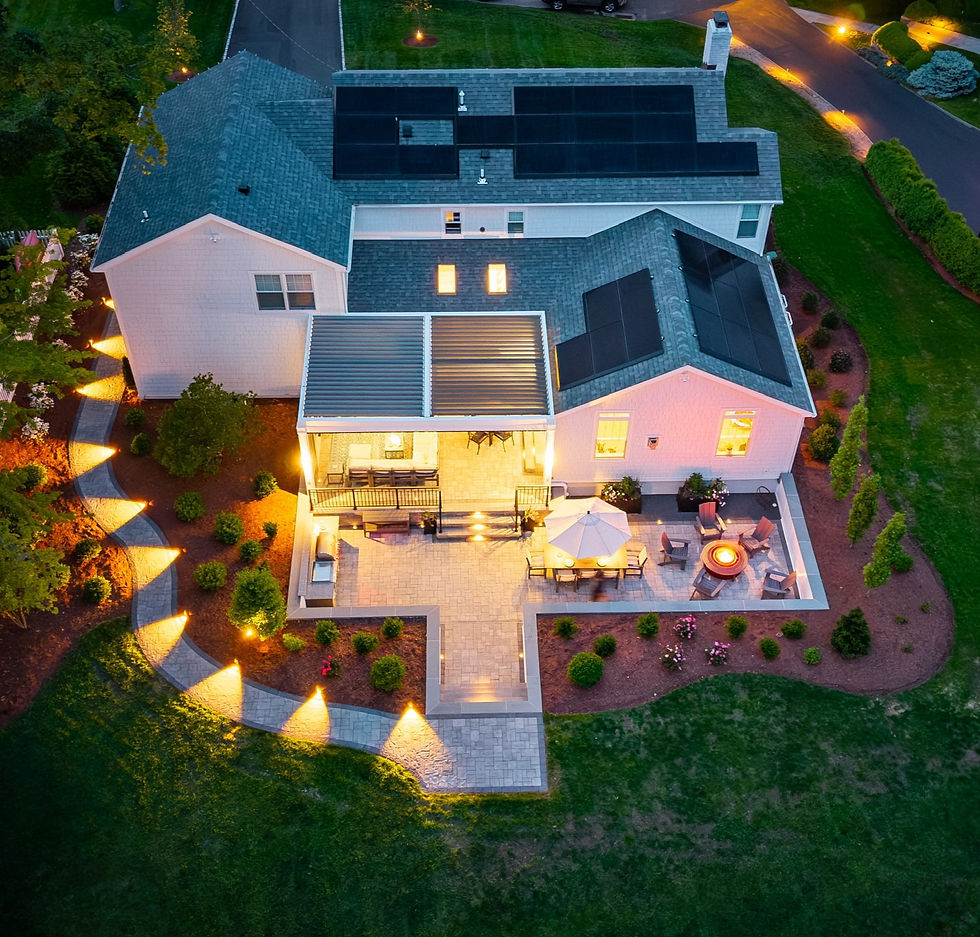
Exterior and Landscape Lighting

Fireplaces and Fire Features

Water Features and Waterfalls

Stone Veneer and Composite Stone Veneer

Patios and Walkways

Outdoor Kitchens

Concrete

Trails and Garden Paths

Driveways

Retaining Walls

3-Season and Enclosed Outdoor Living Spaces

Site Drainage & Water Management
Softscape Design & Planting Installation
Outdoor Living Design and Build

Double-Sided Stone Walls and Stone Columns

Fencing and Privacy Plantings
Commercial Retaining Walls-- ADD INTO RETAINING WALL SECTION


