%20(2).png)
Crafting Outdoor Living Spaces & Fine Exteriors: Woodbury & Middlebury Homeowners Guide
The Litchfield Hills and upper New Haven and Fairfield County present a unique set of environmental challenges that demand a higher standard of construction. In areas like Woodbury and Middlebury, a successful outdoor living space is not merely an aesthetic addition; it is a structural installation that must account for heavy clay soils, significant hydrostatic pressure, and the rigorous Connecticut freeze-thaw cycle.
At Excellence Masonry and Contracting, we specialize in "over-built" and “value-engineered” solutions that prioritize longevity, function and architectural cohesion. This guide outlines the technical specifications, material selections, and 2026 market trends for homeowners seeking a professional-grade outdoor transformation.
Have questions about your project or property? Get in touch today!
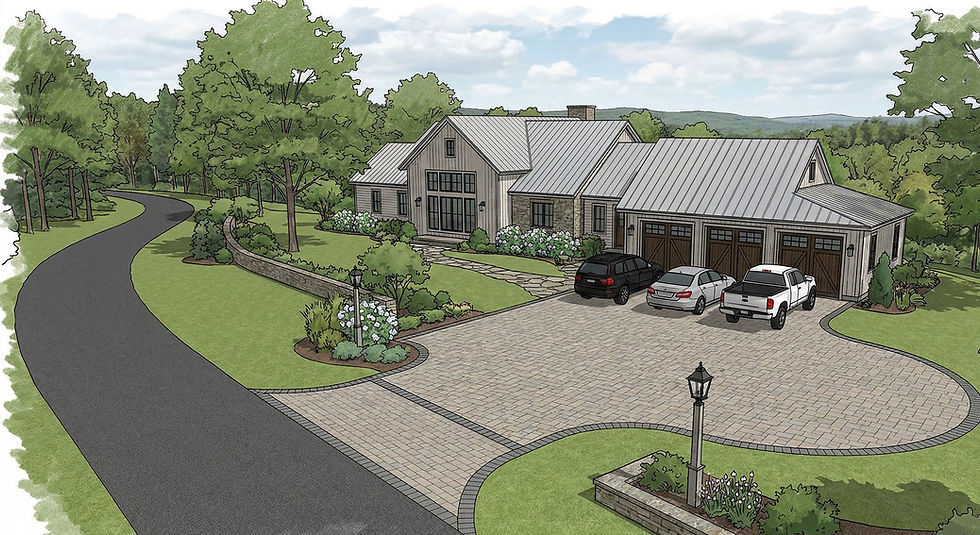
Woodbury and Middlebury Property Considerations: Similar, But Different
Designing an enduring outdoor space in Woodbury or Middlebury requires a deep respect for Connecticut’s relentless freeze-thaw cycle, 4 season climate, water issues and the mandatory structural 42-inch frost depth. While both towns share the same climate, their subterranean profiles can demand different construction strategies. In Woodbury, we often work with the well-drained, sandy loams of the Pomperaug Valley, which require meticulous compaction to prevent settling. Conversely, Middlebury’s upland terrain more frequently features a dense "hardpan" layer that traps moisture, necessitating advanced drainage systems to protect your masonry from hydrostatic pressure.
Here are some of the Usual and Potential Cases We Encounter in Woodbury and Middlebury:
Usual Cases: Even though the soil composition between Woodbury and Middlebury can be different in the extreme ends of the spectrum- the installation outcome is often similar, but for different reasons. Most local projects involve mitigating the perched water tables common in Middlebury’s clay-heavy soils or managing the high-permeability requirement (or low impervious surface threshold) of sites in the Woodbury valley. In both cases this is managed through a standard permeable deep-base structural system, PVC drainage systems, and a minimum 2% pitch away from your home for flatwork.
Potential Cases: On Woodbury’s higher ridges, we encounter shallow basalt ledge, which may require mechanical breaking to reach safe footing depths. In Middlebury’s lake-adjacent zones, we often encounter strict Inland Wetland mandates, where we need to pivot to high-performance permeable paver systems to handle localized runoff for potential wetland approval. In these cases, we lose a lot of control over project options, and need to design based on the municipalities instruction. Additionally, some middlebury properties are much more clay-dense than others, creating more excavation and drainage work.
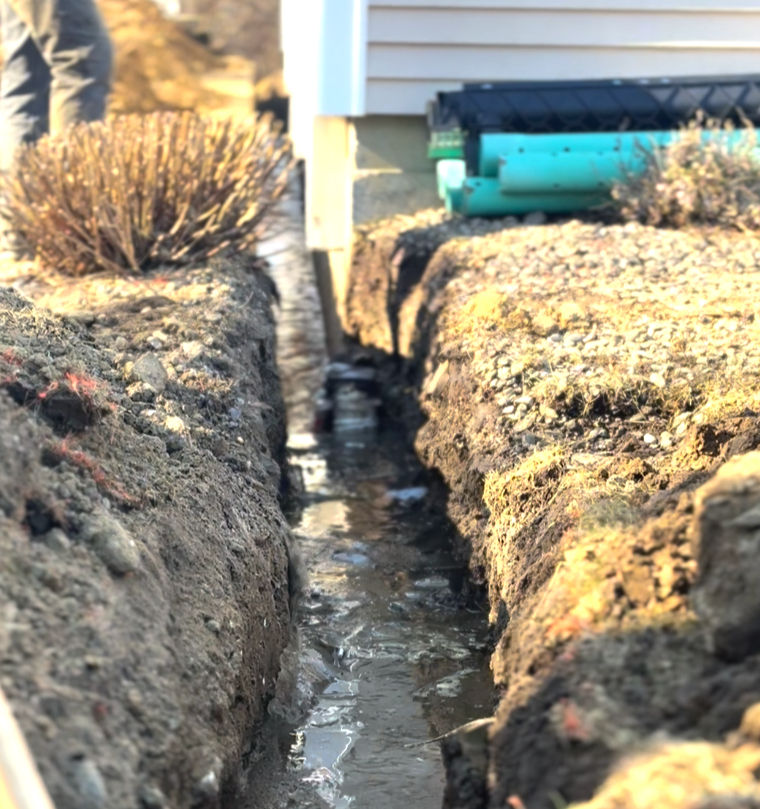
By anticipating these geological variables during the design phase, we ensure your outdoor retreat comes to life seamlessly, and that it remains as structurally sound and visually stunning in twenty years as it is on day one.
IMPORTANT NOTE ON PRICING:
The price ranges discussed are averages based on projects and worksites we encounter often. Due to the inherent custom nature of masonry and outdoor living work, price can vary greatly.
For example, a “500 sqft patio” can be one color of affordable pavers, or it can be an intricate, inlaid blend of 3 types of natural stone and architectural pavers with lighting throughout. Or, your property may be completely flat, while another property has 4 ft of elevation change from one side of the proposed patio space to the other (even a 6in difference in elevation matters a lot!). The price differences between these example scenarios of “simple vs complex” are night and day different for the same size space.
I. Patios & Hardscape Masonry: Building the Foundation
The longevity of, and often the investment needed for any Hardscape or Outdoor Living Space project in Middlebury or Woodbury is determined by the "invisible" work beneath the surface. While finish material cost does matter, the real investment is the prep work required to support the finish material(s) chosen on your specific site.
This invisible work is also often the differentiating factor between hardscape or masonry proposals and proposed investment amounts, often making it difficult to compare proposals in an “apples to apples” manner.
The Technical Standard
Sub-Base Preparation: For standard patios, we utilize a 6-to-12-inch base of 3/4" clean crushed stone. Unlike "processed" gravel, clean stone provides superior drainage, preventing the water retention that leads to frost heaving. This is reinforced with a high-tensile geotextile fabric to separate the aggregate from the native Litchfield soil, as well as biaxial geo-grid to distribute weight more effectively and prevent “over-settling” into the native soil.
Material Selection:
Natural Stone: Full-color Pennsylvania Bluestone remains the regional preference. We recommend a "thermal finish" for a uniform, slip-resistant surface or "natural cleft" for a traditional, organic texture.
Native Stone: Goshen Stone, Liberty Hill Granite or CT Fieldstone are often utilized for retaining walls to mirror the historic dry-stack aesthetics found throughout Woodbury.
Engineered Pavers and SRW Wall Blocks: For high-traffic or driveway-adjacent areas, we specify Techo-Bloc or Unilock for their high compressive strength and resistance to de-icing salts. These manufacturers also make matching SRW wall blocks that provide a more modern aesthetic and economical price point than natural stone.
Investment: Professional masonry or hardscape installations (including structures, features, etc.) currently range from $25 (A Simple Patio) to $75+ per square foot ( A one of one Natural Stone Scape), depending on the size and complexity of the project, the features included, as well as the stone selection, required drainage, base type, and the required excavation.
Projects in Woodbury and Middlebury typically have high drainage requirements and elevation considerations-- increasing the "invisible work" (excavation depth, drainage installations) necessary to craft a durable space. Retaining walls, tiered outdoor living spaces, french drains, and deep permeable bases are very common in this area.
2. Pavilions, Decks & Custom Wood Structures
While patios follow drainage-based depths, any roofed structure—such as a pavilion or deck—must adhere to the 42-inch frost line requirement for structural footings. Depending on the site conditions, and potentially the engineer’s specifications, we achieve stability through helical piles, poured concrete foundations, and concrete piers.
Best Practices in Joinery & Materials
Timber Framing & Structural Framing: We favor Western Red Cedar or Douglas Fir for features like pavilions, loggias, and pergolas. Using heavy timber with mortise-and-tenon joinery ensures the structure can handle the significant snow loads typical of Western Connecticut. For a more modern look, custom powder coated aluminium or galvanized steel is becoming a popular option for deck framing, louver systems, and enclosure framing.
High-Performance Decking: For elevated spaces, Ipe (Brazilian Walnut) or Azek/TimberTech composite are the gold standards. Ipe offers a Class-A fire rating and natural rot resistance, while composite or PVC decking provides a maintenance-free alternative that won't splinter, has “cool-touch” options, and many styles. Cedar or mahogany can also be excellent choices aesthetically, but will require much more maintenance
Enclosures: Integrating retractable glass or motorized screen systems allows you to utilize your space from early April through late November.
Investment:
Custom timber pavilions and similar structures generally start at $20,000-$30,000, while premium decks range from $20,000 to $60,000+. There are pre-fabricated solutions we provide for a value engineered balance of economy, durability and style which require less of an investment- typically half of what a custom build requires.
3. Outdoor Fireplaces, Fire Pits & Stone Veneer
A custom fire feature serves as the focal point of the outdoor environment. In our region, material choice is critical for heat management and durability.
Technical Execution
Veneer Masonry: We utilize Natural Thin Stone Veneer (NTSV) over reinforced CMU (concrete masonry unit) cores. This provides the structural integrity of modern concrete with the timeless appearance of a full-bed stone wall.
Fireplace Design: We often implement "Rumford" style fireboxes for wood-burning units to maximize heat reflection. In more densely populated Middlebury neighborhoods, high-BTU linear gas burners are a popular choice for their convenience and smoke-free operation. Fireplaces can be designed to suit your specific needs and your space - often being integrated into outdoor kitchens, seat walls, and enclosed spaces.
Investment: Custom masonry fire pits range from $5,000 to $9,000; full-scale outdoor fireplaces typically fall between $20,000 and $45,000.
4. Outdoor Kitchens & Custom Cooking Spaces
An outdoor kitchen in Connecticut requires rigorous engineering to ensure gas, electrical, and plumbing lines are protected from the elements.
Materials & Maintenance
Cabinetry & Surrounds: We build islands using non-combustible steel framing or masonry. For finishes, honed granite or leathered quartzite are recommended for their ability to withstand UV exposure and temperature fluctuations without cracking.
Appliance Grades: We exclusively specify 304 or 316-grade stainless steel appliances to prevent corrosion. Brands like Blaze and Lynx offer the durability required for Litchfield County winters.
Investment: A fully integrated outdoor kitchen suite typically ranges from $25,000 to $75,000, depending on the appliance package and utility runs. Appliances are probably the largest determining factor of end cost-- with some quality grills from companies like Blaze coming in at around $2,000.00 - $4,000.00, and others from companies like Al Fresco coming in at $8,000+. Meanwhile there are great budget appliances from Blackstone and similar brands that require a much smaller investment.
Configuration and finish materials would be the next determining factor. Enclosures, heating, seating and other features impact total cost for the outdoor kitchen space greatly as well versus a barebones "grill area".
5. Landscape Lighting & Native Plantings
The "final layer" of a project is what ensures the space is functional at night and harmonizes with the local environment.
Architectural Lighting
Solid Brass Fixtures: We utilize low-voltage systems from Pampa Lighting, Coastal Source or FX Luminaire, and Premium Options from TruScapes. Solid brass or copper fixtures are essential in CT; aluminum alternatives often corrode within years due to soil acidity and moisture.
Softscaping: We prioritize native, deer-resistant plantings. In Middlebury, where deer pressure is high, we utilize Green Giant Thuja, Boxwood, and Leucothoe to create privacy screens that don't require constant chemical deterrents. https://www.excellencecontracting.com/ctperennialplants check out our extensive perennial plant guide- detailing sun exposure, water requirements, lifespan, cost and more.
Investment: Most professional lighting and softscape packages typically range from $15,000 to $35,000+ depending on complexity and size. For softscape-heavy designs - properties - or campuses, the investment can pretty easily exceed $50,000-$100,000. Designs incorporating many mature trees and exotics will always require a much higher investment then perennial-focused softscapes using smaller trees. The maintenance on a native perennial focused softscape design is also much less to consider. In Woodbury and Middlebury, we find that since most properties are wooded with mature flora, clients here tend to forego mature plantings.
SIDE NOTE: Fast growing plant varieties like green giant arborvitae are an excellent way to get massive coverage quickly without the high purchase and install cost of mature flora. Green giants grow incredibly fast, appearing as what many would call a "mature tree" in only a few years.
What You Should Take Away & Apply to Your Project:
No matter what the scope of your project is, here are some general takeaways for Middlebury and Woodbury masonry, landscaping and outdoor living projects that will set you and your project up for success.
Finish material cost is often a smaller impact on the total project investment than many clients assume. It is the preparatory work or "invisible work" up until the finish material is installed, and the unique considerations of your property (access, grade, soil condition, drainage requirements etc.) that impact total project investment the most.
Material selection AND your unique property considerations combined determine the prep work necessary, and thus your total project investment. No two properties are the same. Especially in Woodbury and Middlebury, where soil type, elevation property composition vary greatly. Material and property factors, and how they interact, are why each project is somewhat unique. Considering these factors and they interact is how we determine the best installation for you specifically.
Design is not really about aesthetics, it is about certainty and execution. Projects turn "complex" quickly. Clarity between you, your contractor (hopefully us!) and/or the town can deteriorate quickly.
Take planning and pre-project considerations seriously. Look for contractors that do the same, and have somewhat of a rigid process to analyze and book projects. After all, even a "simple" project is a permanent addition to your Middlebury or Woodbury property, and to your lifestyle.
Going off of the last point, the devil is in the details. Many clients think because their project is conceptually simple, or already determined, a design is unnecessary. But think of it this way: if you pay for a cobblestone driveway, it is very unlikely the contractor will install a red brick driveway.
What is much more likely, is you may discuss a "soft curve" on the edge of the driveway, but come home one day and hate the curve you see. Or you may have discussed plantings along the driveway edge, but once they're installed you can't remember if they are in the exact spots you agreed to. These are small details difficult to convey with words on a quote effectively, with a high chance of them not "looking how you imagined it would", causing great dissapointment and potentially conflict with the outdoor living space or hardscape contractor you hired.
Whether you are right, or the contractor is, does not really matter since at this point there is no way These are only two of many examples of how details determine a project's success, especially when something is conceptually simple.
Marking paint may make things clear at the moment, but eventually fades away from the ground and from memory. A design is not just a pretty picture, but rather is a key technical document for the crew, as well as a consistent point of reference and certainty for you.
Local Regulatory Expertise
Every project in Woodbury and Middlebury must comply with local Inland Wetlands and Watercourses (IWWC) regulations, particularly regarding impervious surface ratios. At Excellence Masonry and Contracting, we manage the permitting and technical documentation required to ensure your project is fully compliant and built to last.
For a technical consultation regarding your property, please visit our website at www.excellencecontracting.com and get in touch!


Comments